 Bulgarian environmentalists are to resettle eight griffin vultures as part of a project to restore the population of the birds of prey. The eight new griffin vultures will be resettled near The Sakar mountains near the eastern town of Svilengrad. | 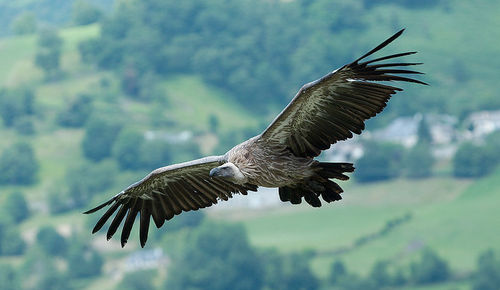 |
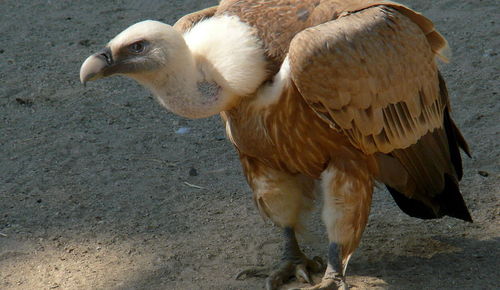 | They are the second group of vultures “imported” from Spain to the Wild Animals Protection Center in Stara Zagora, which is in the same area as Svilengrad. as about a month ago a total of 31 birds were transported from Palma de Mallorca. After a quarantine period and several months in a special facility
for adaptation, the griffin vultures will be released in the wilderness.
Each of them will be marked with special rings. |
The white headed vulture, or the Griffin vulture (Gyps Fulvus), is set
to make a historic return back to the mountain ranges in
Bulgaria, territories which were once his hunting grounds.
Spain will donate 26 griffins, the Bulgarian news agency (BTA) reported on February 18 2010.
Initially
they will be "acclimatised" near the village of Rakinta. Once the
"period of adaptation" is over, they will be set free in the mountains.
The acclimatisation period will last from five to 12 months, depending
on the birds.
The griffins are still found in the Bulgarian mountains but disappeared from Rila in Pirin towards the end of
1960s when the indiscriminate use of pesticides and poison aimed at
mice, rodents and wolves eventually drove the vultures away.
The Griffin vulture reaches up to 110cm in length with a 270cm wingspan, and it weighs between six and 13kg.
Like
other vultures species, the Griffin is a scavenger, feeding mostly from
carcasses of dead animals which it finds by soaring over open areas,
often moving in flocks.
It breeds on crags in mountains in southern Europe, North Africa, and Asia, laying one egg. Griffin vultures may form loose colonies. The population is mostly resident. The birds were donated in Bulgaria under the Global Relief Foundation (GREFA), an NGO.
Translate | 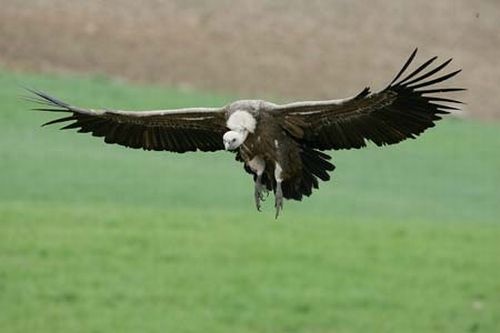 |

